
Venezuela After the Capture of Maduro
The Fallout and Implications of Operation Southern Spear: A Tactical Win and Dubious Operational Impact - Potential Strategic Failure?

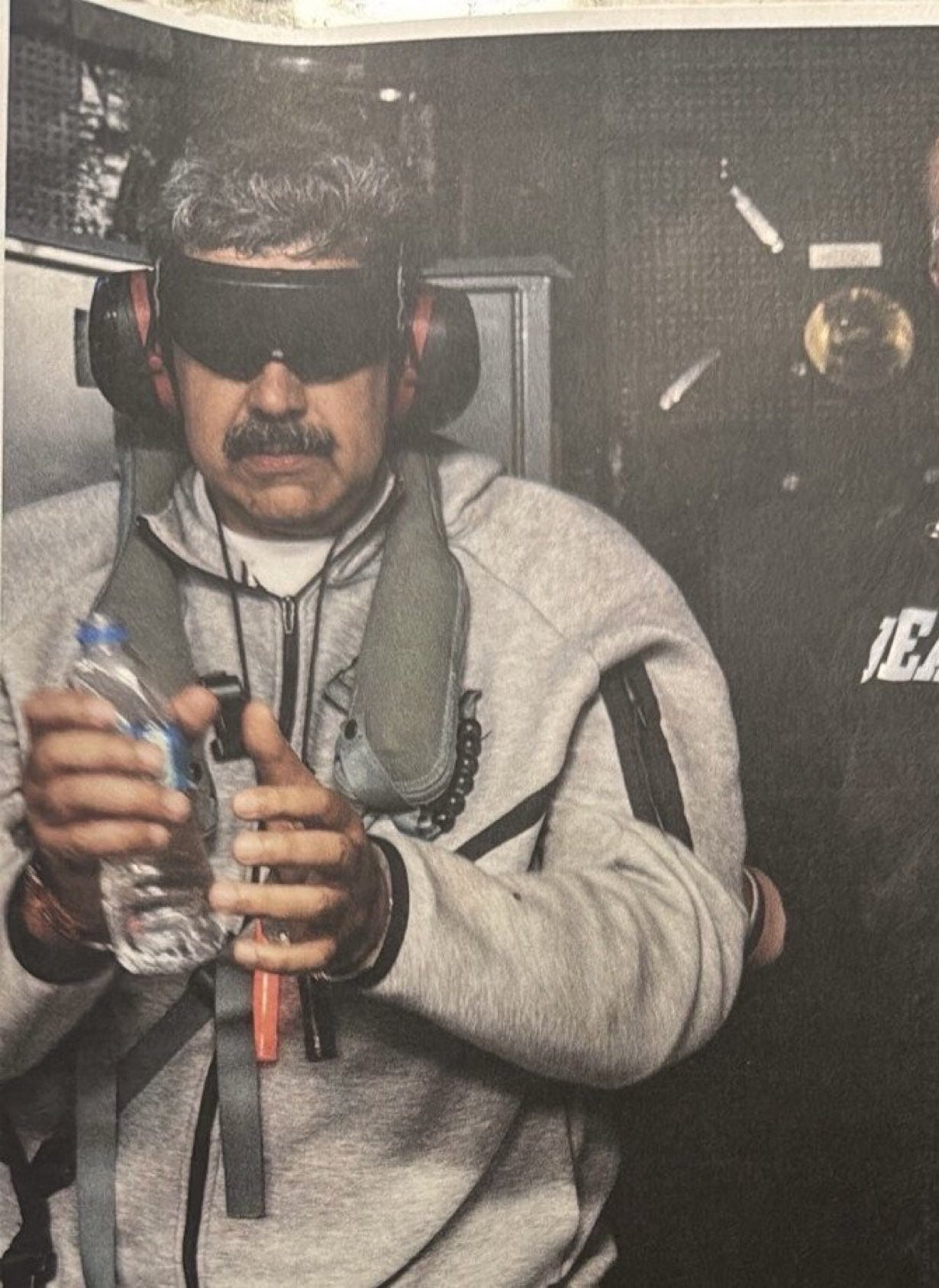
Nicolás Maduro in Custody Aboard the USS Iwo Jima
At 1:00 a.m. ET on January 3, the United States military launched a daring raid into Caracas that resulted in the capture of Venezuelan President Nicolás Maduro. A helicopter carrying U.S. special operations forces descended on Maduro’s residence as American aircraft and naval assets disabled air defense systems and provided suppressive fire. Maduro and his wife were positively identified by U.S. forces, taken into custody, and transferred aboard the USS Iwo Jima off the Venezuelan coast. The operation lasted less than an hour, resulted in no American casualties, and culminated in the exfiltration of one of the United States’ principal adversaries in Latin America.
Operation Southern Spear was, by any tactical measure, a near-flawless success. However, this mission is already revealing itself as a strategic gamble - one that risks producing instability, weakening international norms, and burdening the United States with responsibilities it appears unprepared to manage.
For several months, this Substack has covered the military buildup off Venezuela’s coast and throughout the Caribbean. Shortly after the arrival of the first carrier strike group led by the USS Gerald R. Ford, I operated under the assumption that the Trump administration had already committed itself to regime change in Venezuela and that it was only a matter of time before a major military operation followed. According to details provided by General Caine earlier today, that assessment appears correct. The raid was planned well in advance and hinged on a series of variables aligning (most critically weather conditions and Maduro’s precise location) before execution was authorized. Given the composition of forces assembled off Venezuela’s coast, primarily a single Marine Expeditionary Unit, there was little prospect for a large-scale or sustained military campaign. Instead, U.S. air and naval power, combined with a Marine force supporting elite special operations units, enabled a tightly executed surgical strike to capture Maduro. At the time of writing, Maduro and his wife are en route to the Southern District of New York to face charges brought by the Department of Justice.
The more consequential question is what follows. In his first public remarks after the raid, President Trump declared, “we are going to run the country now,” while simultaneously referencing the return of American energy companies to Venezuela. What this means in practice remains dangerously unclear. Does the administration intend to impose a provisional government administered by the U.S. military, akin to the Coalition Provisional Authority in Iraq? Will Maduro’s governing apparatus remain intact, with Washington simply anointing a successor? Trump has already dismissed Venezuelan opposition leader María Corina Machado, claiming she lacks the support or respect to govern—a judgment that appears less rooted in Venezuelan political realities than in Trump’s hostility toward democratic outcomes and personal resentment of Machado’s Nobel Peace Prize. Meanwhile, Venezuela’s vice president has reportedly fled to Russia, demanding Maduro’s release and declaring that Venezuela “will never be a colony of any other nation.” These signals suggest that remnants of the Maduro regime are unlikely to acquiesce to unilateral American dictates. If the administration sidelines Venezuelan political actors entirely, the United States will inherit not only the task of governance, but also the immense financial burden of rebuilding Venezuela’s shattered economy and infrastructure.
It is also unclear whether this operation meaningfully degraded the broader ecosystem that sustained the Maduro regime. Despite the regime’s failure to defend Maduro during the raid, the senior leadership of the Venezuelan military appears largely intact. There is no evidence that the operation targeted the leadership of Tren de Aragua or other regime-aligned non-state actors. While these groups pose little conventional threat to U.S. forces, they retain the capacity to destabilize post-Maduro Venezuela through criminal violence or to carry out reprisal attacks against civilian targets. Tactical decapitation alone rarely dismantles the systems that keep authoritarian regimes alive.
The energy dimension of this operation deserves separate consideration. The seizure and reopening of Venezuela’s oil sector could flood global markets, lower prices, and reduce revenue streams for Russia—particularly as Moscow continues to finance its war in Ukraine. This effect, while real, should not be overstated. Any economic pressure placed on Russia through energy markets does not offset the broader strategic and normative damage inflicted by the method used to achieve it. Economic leverage gained through coercive regime change carries costs that extend well beyond oil prices.
Those costs are already apparent in the global response. Venezuela has long exported oil to China and aligned itself economically with both Beijing and Moscow. The sudden removal of a client state in Latin America may incentivize both powers to seek compensatory leverage elsewhere, including through escalatory actions in Ukraine, increased pressure on Taiwan, or more aggressive posturing across the Global South. At the same time, prolonged instability in Venezuela risks triggering a refugee crisis that would strain neighboring states such as Brazil and intensify pressures at the United States’ southern border.
Most consequential is what Operation Southern Spear signals about the future of U.S. foreign policy and the precedents it sets. The forcible removal of a sitting head of state, seizure of national infrastructure, and assertion that the United States will “run the country” mark a clear abandonment of even the pretense of adherence to a rules-based international order. While Russia’s failed attempt to decapitate the Ukrainian government in Kyiv was undertaken for purposes of conquest and subjugation—and the United States claims to be acting under the banner of law enforcement—the precedent of unilateral regime removal by force matters. Methods shape norms, and norms shape behavior. In this case, Washington has weakened its standing to condemn similar actions by authoritarian powers.
That erosion is compounded by the absence of congressional authorization. The operation was conducted without an Authorization for Use of Military Force, despite months of visible military preparations that prompted repeated calls for legislative oversight. Secretary of State Rubio has argued that congressional involvement risked operational leaks. That justification is thin. What matters most is not this operation alone, but the precedent it sets for unilateral uses of force by future presidents of either party absent democratic accountability.
Today’s mission represents the “Trump Corollary to the Monroe Doctrine”—the so-called “Donroe Doctrine”—in full effect. The United States has achieved a decisive tactical victory, but now faces a far more complex strategic environment. Failure to manage Venezuela’s transition credibly will deepen instability, inflame regional resentment, and invite opportunistic behavior from China, Iran, and Russia. Without a legitimate political transition, international backing, and congressional accountability, Operation Southern Spear may ultimately be remembered not as the liberation of Venezuela, but as the moment the United States openly abandoned the constraints that once distinguished it from the very regimes it opposes.
Thank you for this update - wars are as easy as falling off a log to get into, not so easy to manage.
Trump’s shifting attack rationale exposes the flimsiness of his trade war with Canada over a minuscule amount of drugs as he arrests ONE S. American drug lord but pardons another — the main difference is their usefulness to himself & their ‘tithing’ - it was never about the drugs. 💰
If the ‘John Robert’s conservative *SCOTUS’ doesn’t clip his wings on this count (phoney tariff war rationale) then the world really does become Donald’s oyster!
💠‘Hegemony’ should become some dictionary’s Word of the Year, because Trump has made it all about dominance & carving up the world’s spheres of influence, and he has decided ‘the Americas’ are his … the Devil’s henchmen can take the rest!
Will MAGA lap this up and claim this military victory as ‘his’?
Or will they see the dangers, like most of the rest of the world does?
— and let’s see where the Epstein files & Trump’s other political & moral failures land in 2026.
As trump has the attention span of a nanosecond he will loose interest in what happens in the country.its all about the oil the people be dammed.find it of interest that he pardoned the head of Honduras for the same charges because the Biden administration didn’t treat him fairly but kidnapping is a celebration when he does it.his looking for a strong leader is just another way of saying only ultra right wing Christian nationalist need apply