

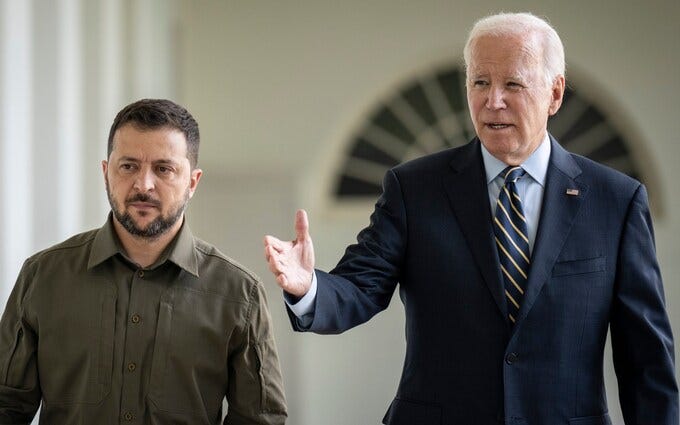
This pessimistic report card on the war figures in the blunt assessment of the current and future state of the war made by General Valery Zaluzhny, Ukraine’s top military officer. However, by focusing on technology to explain why defensive operations have had primacy over offensive operations, Zaluzhny missed an opportunity to reflect on and fix Ukraine’s shortfalls. Zaluzhny states that “Just like in the First World War we have reached the level of technology that puts us into a stalemate,” but technology is only part of the issue. Yes, Ukraine lacks airpower, sufficient artillery, and modern Western armored vehicles, but other critical deficiencies have at least as much to do with Ukraine’s stalled offensive. This attention, on technology and insufficient material, rather than the deficiencies in logistics and training, focuses on external problems beyond Ukraine’s control rather than on issues Ukraine can potentially fix.
The lack of focus on sustainment and repair of Western-donated equipment and the inadequate logistical preparations are both a Ukrainian and U.S. shortfall. Ukraine remains too focused on acquiring new material instead of keeping its current inventory at maximum functional status. In many cases, more than half of the donated gear is damaged or nonfunctional due to wear and tear. Ukraine should be aggressively advocating for repair and maintenance capabilities, but it is not. The Department of Defense has also been negligent in its support of donated equipment. Almost all the support for Ukraine is conducted outside of its territory in massive depots in Poland. You cannot fight a war with your repair facilities 800km from the frontlines; that is a recipe for disaster. The Department of Defense refuses to fund civilian U.S. defense contractors in Ukraine to do this critical work, such as running repair parts facilities, repairing broken and damaged equipment, and training Ukraine’s technicians and operators on the theory that such a program of support would trigger a hostile Russian response, including targeting U.S. contractor personnel. But such a capability can be defended against Russian attacks and would not risk triggering a Russian escalation against NATO.
The lack of proper training is an equally critical shortfall. The West has been too focused on training Ukraine’s fighting troops and insufficiently focused on training the logistical staffs and support troops, one of the real superpowers of the U.S. military. The U.S. invests enormous resources into preparing our troops with sufficient logistics to conduct synchronized operations. This skill is exceptionally hard to develop, but we should invest in this effort in Ukraine. To break through Russian defenses, Ukraine will have to mass forces, breach obstacles, and suppress enemy artillery, airpower, drones, etc. Ukraine will need to ensure it can communicate and operate under electronic warfare assaults while using its own electronic warfare systems to disrupt Russian communications and their ability to employ suicide drones. There are scores of other tasks required to conduct an offensive, so well-trained staffs capable of synchronizing and orchestrating these complex operations are essential. Both logistics and combined arms operations are critical and unique advantages of the U.S. that we can at least attempt to develop in Ukraine, but we are not.
The lack of American support for Ukraine and a bias towards Russia has deep roots back to the collapse of the Soviet Union. Across administrations, the U.S. has consistently disregarded Ukraine’s security concerns. To this day, the Biden Administration is wishing away the threat posed by the Russian Federation, either through malice or ignorance. This is the same threat Ukraine has faced for the last 30 years and throughout its struggle for independence and sovereignty. The U.S. has proven to be a poor ally by consistently miscalculating Russian intentions, misunderstanding the true risks of fully supporting Ukraine, and disregarding the interest and value of Ukraine to regional and global security. Much of the rationale was and continues to be driven by the hubris of a great power, desirous of exclusive relations with other great powers.
The argument that the Biden administration had to move incrementally to avoid escalation or to keep its allies together doesn’t hold water. It’s a post facto justification for failing to do enough. The reality is that the administration moved slowly because it had a deeply misplaced fear of being the first trigger for the war, then believed that Ukraine had no chance of resisting Russia. After Ukraine proved otherwise, the Biden administration feared the threat of escalation and then became concerned over the possibility of a Russian loss triggering the breakup of the Russian Federation. Now it is satisfied with a status quo for next year on the notion that after the 2024 presidential election and a Biden victory, the conditions will be set for Putin to end the war. But what if Russia makes major gains in 2024, which is a distinct possibility, and what if Trump wins in 2024? Both scenarios set the condition for a decisive victory for Russia and a tragically dangerous security environment for the U.S.
Either way, Ukraine’s political system will destabilize. The U.S. and the West will largely own that loss and the consequent insecurity, geopolitical instability, and authoritarian opportunism resulting from a Russian victory. There are some measures the U.S. can take to avoid enabling greater Russian success. The most important actions are now no longer military support. That, of course, must continue and accelerate, and the U.S. and democratic world should provide Ukraine with the capabilities General Zaluzhny has requested to avoid not just fixed frontlines and trench warfare, but the rollback of Ukrainian forces.
The most important actions the U.S. and the West can take, however, are political. The priority must be generating the political will to pursue a Ukrainian victory and Russian defeat. This can be achieved by fully recognizing the risk of a Russian triumph and Ukrainian defeat for the U.S. and NATO. To prevent such a scenario NATO will need to offer an ironclad security guarantee through NATO and European Union membership. Former NATO Secretary General Fogh Rasmussen has been one of the senior-most proponents of the idea of offering Ukraine membership and providing Article V guarantees to the portions of Ukraine under Ukrainian control. Rasmussen set out three principal reasons for Ukraine to be offered membership. Ukraine inside NATO would act as a bulwark against a still-aggressive Russia. Ukraine in NATO would eliminate a decades-long flashpoint in the region between Russia and the West and neutralize the “grey zones are danger zones” for Russia to attack. He also argued the Ukrainian army is now the most battle-hardened in Europe and would be an asset and example to European powers. Ukraine in the EU would enable the reconstruction and transformation of Ukraine and establish a powerful model for other former Soviet states to emulate.
On the equipment side of the equation, the U.S. continues to fail to provide sufficient capabilities in adequate quantities. For instance, only about 20 ATACMS were provided to Ukraine, but they still managed to destroy a score of extremely valuable attack helicopters. Consider the potential of 200 ATACAMS wreaking havoc on helicopter bases, logistics bases, command and control nodes, and bridges like the Kerch Bridge from Crimea to mainland Russia. Or consider the effect that those missiles would have had on helicopter bases if provided at the beginning of the counteroffensive. Ukraine would have had significantly better results in neutralizing the helicopters that blunted the offensive in the summer and still prove effective at destroying Ukraine’s armor. The same goes for F-16 fighter jets pushing back Russian airpower launching guided bombs, destroying enemy radars and electronic warfare platforms, as well as helicopters foolish enough to approach the frontlines.
Critics argue that the window for effectively arming Ukraine and enabling a successful offensive to liberate Russian-occupied territory has already passed. Some go further and argue that finite U.S. military resources should be spared for other potential crises. However, if the West and Ukraine reform the training regimes to enable more complex combined arms operations, fix the logistical challenges, including establishing a regime to maintain and repair equipment, and the Ukrainian Armed Forces get the weapons systems they need, then they can win decisive battles and regain strategically vital areas of lost territory and position the political leadership for meaningful peace negotiations.
Currently however, the U.S. and NATO are simply not prepared for Russia to lose this war. Nothing in the level of mobilized resources or policy decisions suggests the contrary. And it’s a travesty that the majority of NATO neither spends nor has committed to spending 2% of their GDP on defense. It seems unlikely that the Biden Administration, which has not had a strategy or a strategic objective vis-à-vis the Ukraine war, sees these dangers or has the fortitude to take such concrete steps to aid Ukraine or safeguard European stability. This is not merely speculation. I am drawing these conclusions after engaging directly with policymakers and hearing them talk in terms of preserving a stalemate and status quo through 2024, without an understanding of the difficulty of Ukraine persevering. They talk about support for Ukraine in language that says the U.S. and broader West have done all they can, essentially throwing their hands up in the air and asking what more can be expected of them.
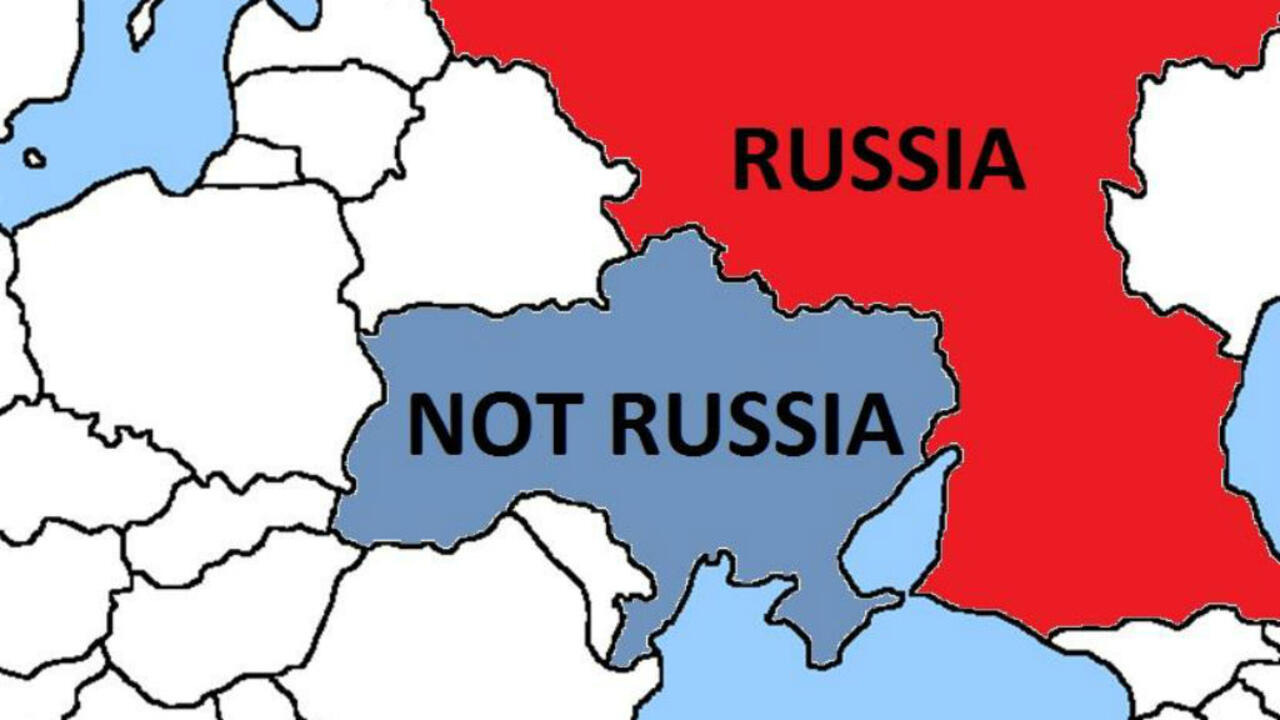
I, and likely too many other analysts, couched the Ukraine war in terms of advancing U.S. interests. If I could go back two years, I would know to encourage the policy community to frame the war in terms of preventing the worst-case scenario outcomes. There is a real risk that Ukraine loses significant territory, Ukraine’s government is forced into a humiliating peace settlement that then collapses the government, and Russia––emboldened and perceiving the collective West and NATO as vulnerable––pursues military aggression regionally, including against NATO. And, while I loathe to say it, in 2024 under these dire conditions we are likely to see building pressure forcing Ukraine to accept Russia’s terms for peace negotiations. Consequently, Ukraine’s sovereignty prospects will dim in 2024.
Tomorrow I will post Part 3, Why It Matters.
I trust your observations as to what this administration needs to do. I assume that you are familiar with Robert Reich. When he wants his audience to take action, he sends out a link with a letter for us to send to our state representatives. It's all set up for us. All we have to do is send it and out go thousands of calls for action to our representatives. When I send one of his letters, all three of my reps send back their form letter acknowledging that they have received my 'letter'. The point is my 'letter' gets counted. It informs our Congress what is important to us. One voice alone will have no influence but 100,000 makes a difference.
I am very sorry that you are no longer a part of the military that helps keep us safe. We need you. We need your advice and wisdom but you are still a valuable voice speaking up for us.
Thanks
Yesterday a friend of mine and I were discussing Dresden, Germany and the right wing presence. She said that years ago when she would be in Dresden, the fact that the Pegida would rally each week, and that the group had such anti-German, anti-European hatred that even though she is a White woman, who speaks pretty good German, she would feel afraid. We were discussing that the right wing hates women and their behavior is always a wild card. I say to just to point out that both Germany and the USA are proceeding with the caution that one, seems to get the most backing of their people, and two, that shows that they think Putin is a wild card. Ukraine still has no choice to fight him if he is not, but realizing that they need their populations behind Ukraine to give Ukraine support means that both should be more aggressive both on their messaging, and on going after Russian bots, which I am sure are a big presence both in the Former East German states of Germany, and all right wing groups, as well as in the USA, on right wing website, and on Republican websites.