

For several years Washington faced a challenge from the so-called “Axis of Resistance” - an Iranian-led grouping of authoritarian regimes and non-state actors that worked to undermine American interests and threaten our allies abroad. The Axis of Resistance included the theocracy of Supreme Leader Ayatollah Khamenei in Iran, the dictatorship of Bashar al-Assad in Syria, the terrorist groups Hamas and Hezbollah, and the Houthi rebels in Yemen. This network received patronage and political support from China, Russia, and North Korea while orchestrating attacks against Americans and our allies.
Today, the “Axis of Resistance” is in shambles. Assad lives in exile in Moscow, the leadership of Hamas and Hezbollah have been eliminated, and the Ayatollah is dead. There is no individual country or alliance that can match the lethality and effectiveness of the United States military today.
This begs the question, why doesn’t it feel like we’re winning?
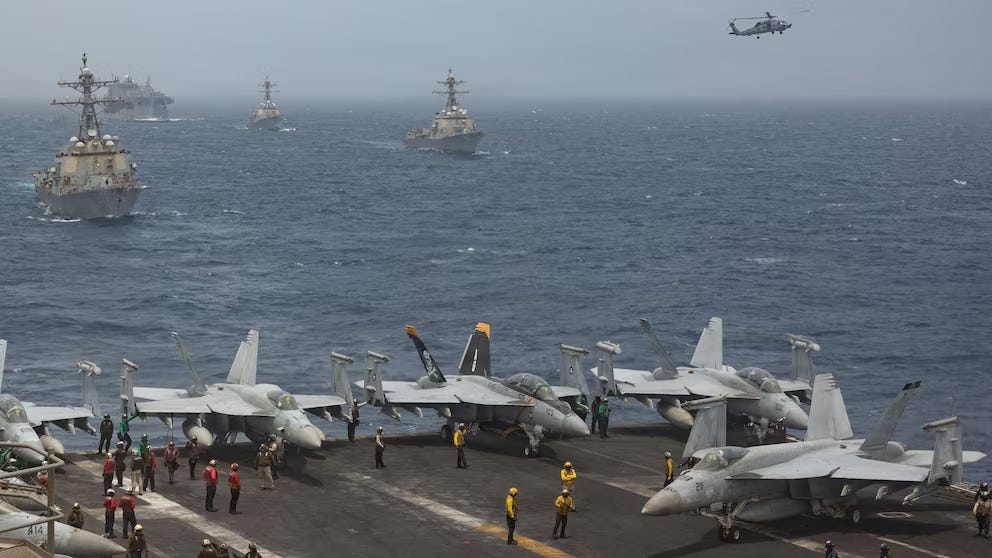
What we have seen unfold in the Middle East over the past seven months is a reflection of a lack of judgement and strategy by the current administration. The war in Iran has no off-ramp and the administration has no vision for what victory looks like. The end result of this shortsightedness is the squandering of the American military might on an open-ended mission. We have burned through our precision munitions, over-extended our navy, and spent most of our interceptors in the region - now our opponents will dictate the terms of engagement with museum pieces and equipment that costs a fraction of the price of our technology.
The administration learned the wrong lessons from January. The seizure of Venezuelan Dictator Nicolas Maduro was a flawless display of American military prowess and efficiency. However, the real challenge wasn’t necessarily the mission to depose Maduro, but instead navigating what comes the day after. The same power structures remain in place and the opportunity for a true democratic transition in Venezuela has passed. This strange state of limbo should have been a warning for the administration, not encouragement to repeat the same strategy in Iran.
The mining and closure of the Strait of Hormuz has been war-gamed for decades. The hypothetical shutdown of the global petroleum trade is a scenario that strategists in the White House and Pentagon have formed contingency plans for. The lessons of these exercises are lost on the current administration. A prolonged air campaign in Iran (or worse, a ground invasion) without a defined end state has likely already been simulated and shown to be a costly mistake - I’m sure Trump will disregard that assessment too.
The intelligence, lethality, and expertise of the American military has been squandered on a needless war - our enemies are weaker yet we have never been more at risk. A new generation of political leadership will have to repair the damage of this costly mistake.
More like Generations of leaders
This work begins in 2027
Ends when our allies and friends decide to forgive us